Ιn each moment of every day, a conversation is taking place inside us
that’s one of the most vital we will ever find ourselves engaged in.
It’s the silent, often subconscious, and never-ending conversation of
emotion-based signals between the heart and the brain. The reason this
conversation is so important is that the quality of the emotional signal
the heart sends to the brain determines what kind of chemicals are
released into our bodies. When we feel what we would typically call
negative emotions
(for instance, anger,hate, jealousy, and rage), the heart sends a
signal to the brain that mirrors our feelings. Such emotions are
irregular and chaotic, and this is precisely what the signals they send
to the brain look like.
If you can envision a chart of the ups and downs for the stock market
on a wild and volatile day, you’ll have an idea of the kind of signals
we create in our hearts in times of such emotions. The human body
interprets this kind of signal as stress, and sets into motion
mechanisms to help us respond appropriately.
Figure 4.1. A comparison of the signals between the heart and the
brain in two extremes of emotion: the “negative” emotion of frustration
and the “positive” emotion of appreciation. Source: The Institute of
HeartMath.
The stress from negative emotions increases the levels of cortisol
and adrenaline in our bloodstreams, hormones that are often called
stress hormones, which
prepare us for a quick and powerful reaction to whatever is causing us
stress. That reaction includes redirecting the blood supply from the
organs deep within our bodies to the places where it’s most needed in
such times: the muscles, limbs, and extremities that we use to either
confront the source of our stress or run as fast as we can to get away
from it—our instinctive fight-or-flight response.
For our distant ancestors, this response would save them from an
angry bear that had camped out in their cave, for example. When they
felt that the threat was gone, their emotions shifted and the elevated
levels of the stress hormones returned to the normal levels of everyday
life. The key here is that the stress response is designed to be
temporary and brief. When it kicks in, we infuse our bodies with the
chemistry needed to respond quickly and powerfully to the threat. It’s
all about survival. The good news is that when such high levels of
stress chemicals are present, we can become superhumans. We’ve all heard
stories of a 98-pound woman successfully tilting a full-size automobile
off the ground long enough to save her child pinned beneath—and doing
so without first considering if such a feat was even possible.
The Fight or Flight Response
In such cases, the fight-or-flight response is activated on behalf of
the child, who would have died without intervention. In these
instances, the extra-human strength of the mother is attributed to the
surge of stress hormones pouring into the body from her feelings of
do or die—feelings
that originate in the heart. The flip side of the good news is that
while the benefits can be helpful during a short period of time, the
stress that triggers the surge effectively shuts down the release of
other chemicals that support important functions in our bodies. The
release of vital chemicals that support functions of growth, immunity,
and anti-aging is dramatically reduced during times of fight or flight.
In other words, the body can be in only one mode or the other:
fight/flight mode or
healing/growth mode.1
Clearly, we were never meant to live day in and day out with constant
stress as a way of life. Yet this is precisely the situation that many
of us find ourselves experiencing today.
In our modern world of information overload, speed dating, multiple
consecutive double cappuccinos, and the often-heard sense that life is
“speeding up,” it’s inevitable that our bodies can feel that we’re in a
constant state of never-ending stress. People who cannot find a release
from this kind of stress find themselves in sustained fight-or-flight
mode, with all of the consequences that come with the territory. A quick
look around an office or a classroom, or even a glance at our family
members over Sunday dinner, confirms what the data suggests. It’s not
surprising to find that people with the greatest levels of sustained
stress are also in the poorest health.
The rise in U.S. statistics for stress-related conditions, including
heart disease and stroke, eating disorders, immune deficiencies, and
some cancers, is less of a surprise when we take into account the
relentless stress that many people experience in their daily lives. The
good news is that the same mechanism that creates and sustains our
stress responses, often on a subconscious level, can also be regulated
to help us relieve the stress in a healthy way—even when the world is in
chaos. And we can do so quickly and intentionally.
Just the way our hearts send our brains the signals of chaos when we
feel negative emotions, positive emotions send another kind of signal to
our brains that is more regular, more rhythmic,and orderly. In the
presence of positive emotions, such as appreciation,gratitude,
compassion, and caring, the brain releases a very different kind of
chemistry into the body. When we feel a sense of well-being, the level
of stress hormones in our bodies
decreases, while the life-affirming chemistry of a powerful immune system with anti-aging properties
increases. The shift between the stress response and a feeling of well-being can happen quickly.
Studies documented by the Institute of HeartMath (IHM), a pioneering
research organization based in Boulder Creek, California,have shown that
cortisol levels can decrease as much as 23 percent, and levels of DHEA,
a life-affirming precursor to other vital hormones in the body, can
increase 100 percent if we spend as little as three minutes using
focused techniques designed to produce such responses.
2 The
reason why I’m describing these phenomena is because the techniques that
are found to have such benefits upon our health are the same ones that
create the resilience in our hearts. This is the key to personal
resilience in life. The quality of our emotions determines the
instructions our hearts send to our brains.
Excerpted from The Turning Point pages 125 to 128 by Gregg Braden. Copyright © 20014 (Hay House).
1Lipton, Bruce. “146-150.”
The Biology of Belief:Unleashing the Power of Consciousness, Matter & Miracles. Santa Rosa: Mountain of Love/Elite, 2005. Print.
2The Impact of a New Emotional Self-Management Program on
Stress, Emotions, Heart Rate Variability, DHEA and Cortisol Intergrative
Physiological and Behavorial Science. 2nd ed. Vol. 33. 1998. 151-170.
Print.





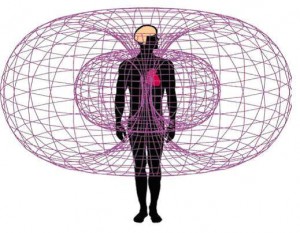 You
have finally transcended the spiritual bypass that some emotions are
‘bad’ or ‘negative’. Instead you embrace all e-motions and instead of
repressing them you allow them to flow through you. You can use anger
for passion or motivation. You can easily empathize with others while
maintaining the integrity of your field.
You
have finally transcended the spiritual bypass that some emotions are
‘bad’ or ‘negative’. Instead you embrace all e-motions and instead of
repressing them you allow them to flow through you. You can use anger
for passion or motivation. You can easily empathize with others while
maintaining the integrity of your field.